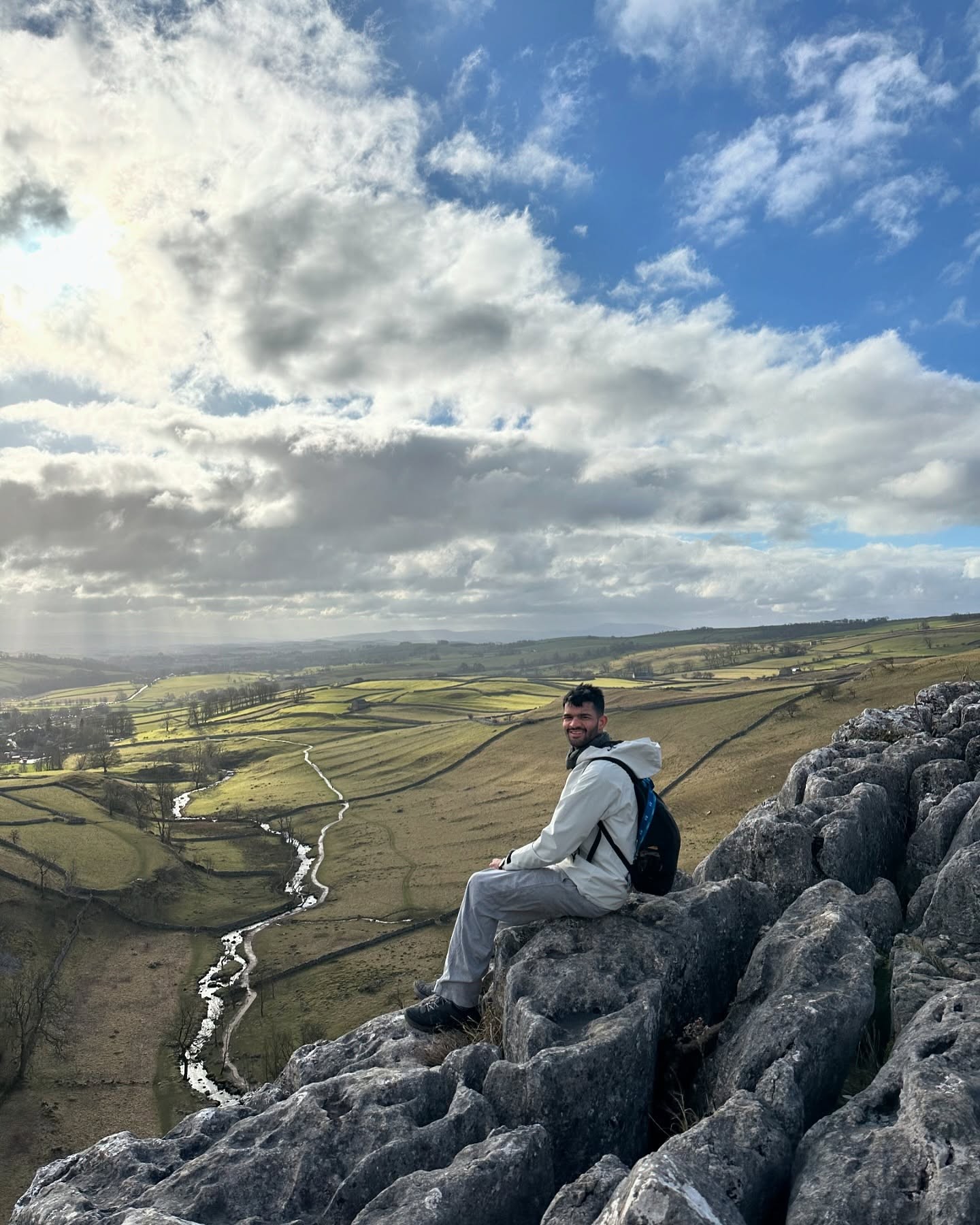
By Shaheen Ramzan
My brother Sakhawat Ali had a way of saying things that stayed with you, not because they were dramatic, but because they carried a quiet certainty. He would smile, almost as if he were sharing something only he fully understood, and say, “Cancer chose the wrong person.”
He never said it with arrogance. Not in denial. Just with a calm, steady belief in life, in himself, and in what it meant to keep going. If you knew him, you would understand.
There is one thing I want to say before anything else. His smile never changed. Not before cancer. Not after stage four colon carcinoma. Not after chemotherapy, surgeries, or the long stretches of pain we could not always see. Not even two days before he left us in December 2025.
Two days before everything ended, he called from London and said to my mother, “Ami, kuch nahi hoga. Main bilkul theek hoon.” He said it so simply, so naturally, that for a moment, we believed him again. That was his gift. He carried hope in a way that made it feel real, even when everything around us was uncertain.
We did not grow up with much. We grew up in Khan Bahadur village in Okara, in a small home with a small karyana shop that my parents built from nothing. As the eldest, Sakhawat stepped into responsibility before he even understood what childhood could be.

After school, he would sit behind the counter until late at night. He was so small that customers would often say, “Aap ka dukandaar to nazar hi nahi aata,” because they could barely see him. When he did not know the price of something, he would call out, “Ami, is ki kya qeemat hai?” while trying to manage the shop. He learned by doing, by watching, by stepping into roles far bigger than his years.
He studied wherever he could. I remember him doing homework sitting inside the freezer because it was the only place he could sit properly. While other children played, he learned responsibility. He learned consistency. He learned how to show up.
Every day, he cycled miles to school, dropping me first before rushing to his own. He was often late, but never absent. His teachers began marking his attendance before he arrived, smiling and saying, “Woh aa jayega.” They called him “last flight,” because no matter what, he always showed up.
When he topped his matric exams, it felt like something shifted for all of us. Banners went up in our village, and people said with disbelief, “Yeh to dukandaar ka beta hai na?” That moment changed everything. My father closed the shop and moved us to Lahore for education. He became a security guard. My mother began working in a school. They had never been to school themselves, but they made sure we would.
Sakhawat carried that sacrifice with him.
In Lahore, he searched for opportunity with urgency. When he found Forman Christian College, he knew that was where he belonged. We could not afford it, but he walked into the administration office and said what he believed, “Parhna bhi yahan hi hai.” He would work, he would manage, but he would study there. And he did.
He taught children, worked full-time, studied full-time, and slept very little. He would laugh and say, “Adhi zindagi to insan so ke guzarta hai,” as if sleep itself was something he could not afford.
When he got his first salary, he did not spend it on himself. He took all of us out to eat. It was the first time we sat in a place like that. Later, he wrote, “Maybe it’s not a big deal for many, but for me, it’s an achievement to afford this after all.” That line has stayed with me, because it shows how he saw the world. His success was measured in our smiles.
He built for others. Through his work, he supported artisans, created opportunities, connected people who would otherwise remain unseen. He travelled widely, but never left us behind. From every place, he would call and say, “Chalo, tour deta hoon,” walking us through streets as if we were there beside him.
Then came the diagnosis. Stage four.
He heard it alone. He carried it home.
I remember the day clearly. He walked in quietly, his shoulders lowered in a way I had never seen before. When our mother asked, “Sakhawat, kya hua hai?” he did not answer. He just hugged her and began to cry. It was the first time I saw him like that. And yet, even then, something in him refused to collapse.
Very soon, he began to rebuild himself around that reality. He said, “Kuch nahi hota. Main inshaAllah theek ho ke dikhaunga.” It was not denial. It was a decision.
He went through chemotherapy, surgeries, exhaustion. And still, he found ways to live. I remember one day after chemo, we went to the hospital rooftop and shared brownies. For those few minutes, there was no illness between us.
At one point, his reports came back clear. He distributed sweets himself. He arranged an iftar in our village mosque. He said with quiet pride, “I defeated it.” And then came the Chevening Scholarship.
Before leaving for the UK, he took us to Nathia Gali. It was cold, rainy, completely unplanned. We had packed wrong, laughed at ourselves, walked in the rain anyway. At one point, he looked at our mother and said, laughing, “Yar Ami, khussas pehan ke aayi hain hiking ke liye.” That laughter still echoes in my mind.

At the time, it felt like a simple trip. Now I know it was a gift.
At the airport, we stood together, smiling and holding back tears. He waved goodbye, and we did not know it was the last time. Even there, alone, he carried everything with him. His studies, his treatment, his responsibilities, and us. He called every day. No matter how tired he was, he made sure we felt his presence.
But the pain returned. There was a moment when his voice changed. He said softly, “Main thak gaya hoon is sab se.” And then, almost immediately, he gathered himself and said, “Ami pareshan nahi hona. Your son is very strong.” Even in exhaustion, he was protecting us.
With him, my laughter was full. He used to say, “Shaheen, main aap ko rota nahi dekh sakta.” And now, I cry more than I ever have. Because he is not here to stop me.
He had so many plans. He would say, “Bas apna ghar ho,” speaking about a future where we were all together, where our parents could finally rest. He dreamed of taking them for Umrah himself, of standing there and saying, “Allah, I have brought them.”
He understood something about life that I am only now beginning to understand. He once told me, “Everything teaches you something.” After his diagnosis, he said he had started living differently. Calling more. Sitting longer. Not delaying what mattered.

He told me quietly, “Mera to pata nahi hai.” And even though we did not want to hear it, he said it with acceptance, not fear.
Before leaving, he planted a small Kachnar tree in our courtyard. He smiled and said, “When I come back, let’s see how much it has grown.”
Today, that tree stands taller than our gate. He is not here to see it. But somehow, he is still in it. When I think about what he used to say, I realise now that he was right. “Cancer chose the wrong person.” Not because it did not take him, but because it never defined him. It never took away his love, his presence, his ability to give.
Some people leave quietly…and then there are people like Sakhawat, who remain in everything.
In every moment of doubt, I still hear him say, “Jani, we can figure it out.”


Leave a Reply